Precious Metals IRA FAQs
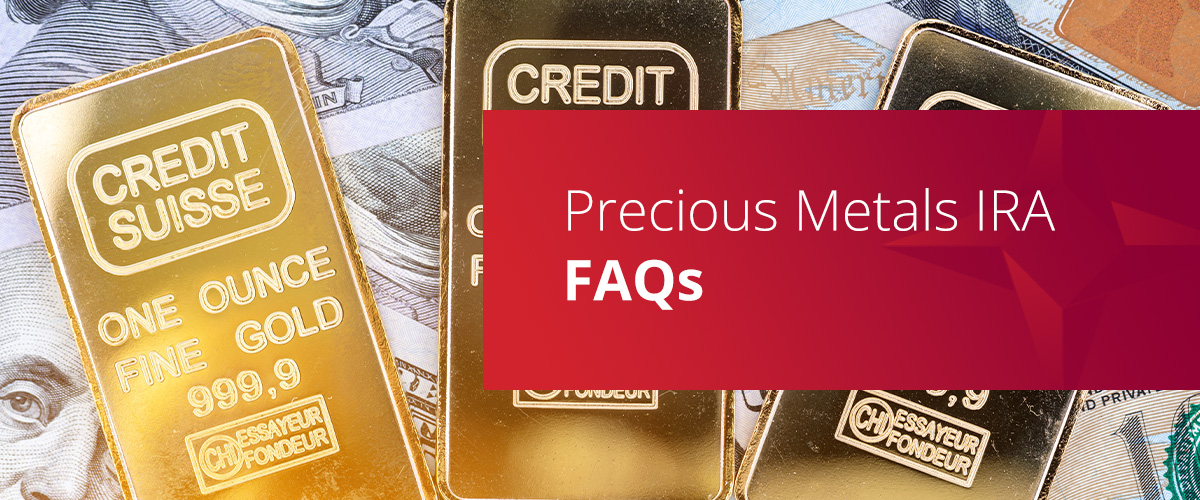
Americans are seeking diverse ways to expand their investment portfolios and protect assets from market volatility and inflation. Hard assets such as metals are a popular choice. Approximately 38.6% of U.S. adults between 35 and 64 bought gold or silver in the last year as an investment.
Despite growing interest in hard asset investments, regulations for investing in precious metals in individual retirement accounts (IRAs) can be complex. This guide details everything you need to know about investing in precious metals with an IRA, including Internal Revenue Service (IRS) requirements and practical considerations.
What Is a Precious Metals IRA?
A precious metals IRA is a self-directed IRA (SDIRA) that allows you to invest in precious metals for retirement savings. This account allows you to invest in several metal types. Legally, you must have a qualified custodian store the metal assets on your behalf.
What Types of Precious Metals Are Available Within an IRA?
Though you might hear the terms “gold IRA” or “silver IRA,” you can invest in a few different kinds of metals. Here are the metals investors can hold in an SDIRA:
- Gold: Gold is in high demand and holds purchasing power during periods of inflation increases and weakening currencies. Types of gold include American Eagle and Canadian Maple Leaf coins.
- Silver: Silver reacts quickly to market changes and is more volatile than gold. Common silver coins include the Austrian Philharmonic and Australian Kangaroo.
- Platinum: Platinum aligns with economic growth cycles and is prevalent across industries, including the automotive sector. Platinum metals include American Eagle and Isle of Man noble coins.
- Palladium: Palladium performance relies on industrial trends, trading at higher prices during production scarcity. Types of palladium include Credit Suisse PAMP Suisse Bars of 99.95% fineness and Canadian Maple Leaf coins.
Precious metal assets may include government coins and bullion bars.
What Is the Difference Between a Precious Metals IRA and a Conventional IRA?
A precious metals IRA is a self-directed account invested in hard asset metals. In a conventional IRA, only assets such as mutual funds, bonds and stocks are qualified investments.
With an SDIRA, you’re responsible for selecting the metals you would like to buy. The custodian handling the metals may be able to help you find the best pricing and metal dealers. They can provide the information, but you make the decisions.
What Are the Benefits of Investing in Precious Metals With an IRA?
Using an SDIRA to invest in precious metals offers advantages for your investment portfolio to protect your finances when it comes to retirement:
- Diversify your portfolio: Precious metals can help reduce risk because they have low correlation with traditional assets. Adding precious metals limits exposure to significant economic declines.
- Capital appreciation: Influences on pricing include industrial demand and global supply restrictions. Scarcity may increase the price of precious metals as mining costs rise. Precious metals are usable for solar panels and hydrogen fuel cells.
- Protect against inflation: Precious metals typically retain their value and prices are likely to rise in line with inflation. Metal assets serve as a form of protection during periods of weakening currencies.
Are Precious Metals Worth the Investment?
For some investors, precious metals can be worth the investment as part of a long-term strategy and may help mitigate risk. There is high value in diversifying your portfolio, despite the costs of enlisting a custodian to store your precious metals. Precious metals are generally unsuitable for short-term trading and are best suited to a five- to 10-year investment plan.
IRS Requirements for Investing in Precious Metals With an SDIRA
It’s essential to understand the IRS requirements and how they affect your precious metals investments:
What Are the Purity Requirements?
The IRS sets out purity requirements for precious metals to qualify for an IRA:
- Gold: 99.5%, though American Eagle coins are an exception.
- Silver: 99.9%
- Platinum: 99.95%
- Palladium: 99.95%
How Can You Store the Precious Metals in an IRA?
Regulations require the storage of precious metals to be in IRS-approved depositories or banks. A depository or bank offers segregation of your precious metal assets, separating them from commingled assets.
Can You Store IRA Precious Metals at Home?
No. Under IRS regulations, storing precious metals in your home is forbidden. By storing precious metals at home, the IRS may treat it as a distribution. If you’re under the age of 59 ½, you may be liable to pay taxes on the full value of the metals plus a 10% early distribution penalty.
Be aware of schemes that claim home storage loopholes.
Opening and Funding a Precious Metals IRA
Below are the FAQs explaining the process of opening an SDIRA to invest in precious metals, including 401(k) restrictions and investment IRA rollover stipulations:
How Do You Open an SDIRA?
To start investing in precious metals with an IRA, follow the four steps below:
- Do your research and find a custodian with experience in precious metals and SDIRAs.
- Fill out the application form to open the SDIRA.
- Secure IRA funding with contributions or transfers from other investment accounts.
- Start building your investment portfolio with a trustworthy custodian, organizing transfers of metals for secure and compliant storage.
Can You Transfer an Existing 401(k) or IRA to an SDIRA?
Yes. You can typically transfer an existing IRA or 401(k) to an SDIRA. However, some employers may impose restrictions on transfers, and existing plans may have “in-service rollover” restrictions.
During the transfer process, your funds are tax-deferred and protected. Paying taxes is not immediate, and your chosen custodian can organize the successful transfer.
What Is the Process for IRA Rollover of Retirement Funds?
The IRA rollover process transfers funds from one account to another. Transferring your funds does not affect any tax benefits:
- Direct rollover: A standard and safe transfer option. A direct rollover simply transfers funds to your IRA custodian, with limited reporting risk and no tax withholding.
- Indirect rollover: With an indirect rollover, you receive the funds personally, and there is a 60-day deadline to transfer funds to your new IRA. Penalties and taxes may apply if you miss the deadline date.
Is There a Minimum Amount You Can Invest?
The IRS does not have minimum investment amounts. However, many custodians stipulate minimum investment amounts to cover storage fees and administrative costs for precious metals.
Many advisors recommend an investment amount between $10,000 and $25,000 to access greater portfolio diversification. Discussing your needs and queries with a custodian will help you reach your investment goal.
How Long Does It Take to Open an SDIRA for Precious Metals?
Various factors may affect the timeline of opening an SDIRA. The account setup can sometimes take between 24 and 48 hours after all necessary documents and applications are complete. On average, sending funds to your IRA can take up to three weeks.
After setting up your account and funds, you may have to wait between two and five days before investing in precious metals.
Fees and Practical Considerations
Once you open an SDIRA, it’s crucial to factor in the relevant fees and potential for market volatility:
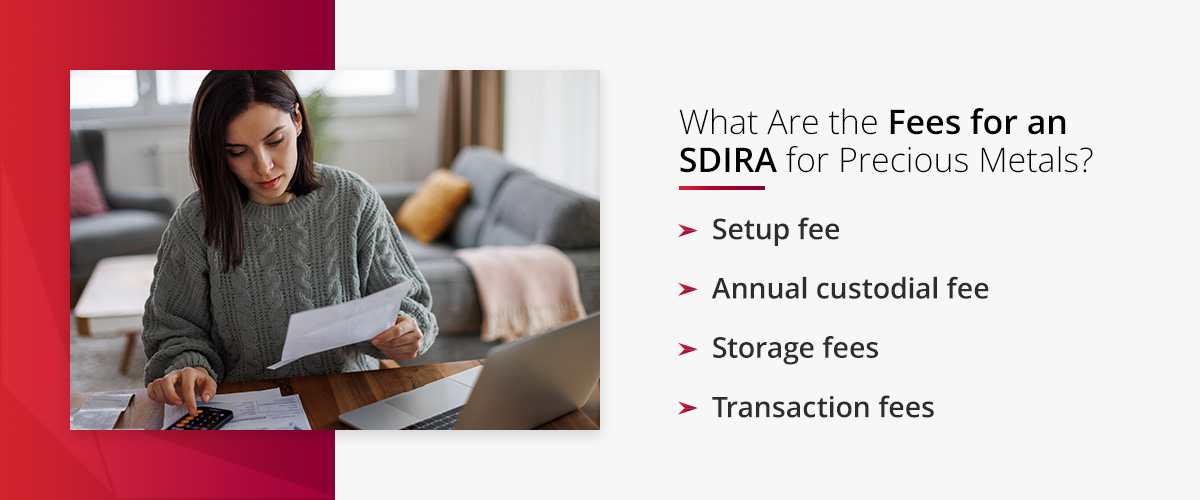
What Are the Fees for an SDIRA for Precious Metals?
Ensure you consider the fees required to open an SDIRA:
- Setup fee: An initial fee to open the IRA and start investing.
- Annual custodial fee: The account custodial fee covers administration and is either a percentage of assets or a flat fee.
- Storage fees: Storage fees include insurance to protect your precious metals and the handling and storage.
- Transaction fees: Transaction fees include dealer markups and spreads during the buying and selling of metals.
How Do You Choose a Reliable Custodian?
Finding the best custodian for your investment involves checking various credentials to give you the confidence in making the right choice:
- Experience and knowledge: Pinpoint custodians with specific expertise and experience of SDIRAs. Some banks may lack the necessary experience.
- Select a flat-fee structure: Custodians may offer a flat fee or a percentage-based fee. A flat-fee structure is preferable and is likely to remain the same throughout your investment portfolio’s lifespan.
- Depository relationships: A custodian with strong relationships with depositories provides confidence that your investment is secure.
- Avoid conflicts of interest: Be sure to avoid custodians recommending specific metal assets. Preference over metals is a conflict of interest.
How Liquid Are Precious Metals in an IRA?
Precious metals are less accessible than other assets, such as stocks. With your agreement, a dealer buys metals from your custodian to turn them into liquid assets. After completing the sale, the cash value is available for reinvestment or withdrawal from your IRA balance, depending on IRS limits.
What Happens to Your Precious Metals in Market Volatility?
Owning precious metals in an SDIRA can help protect you from counterparty risk, such as when a company files for bankruptcy. Metals are transferable to different companies, whereas stocks and bonds may involve risks due to company or market performance.
The quantity of your metal investment portfolio in physical weight will remain unaffected. However, the value of precious metals is at risk due to market volatility. The role of metals in your portfolio may act as a stabilizer during volatile markets.
Tax Implications and Taking Distributions
Another key consideration is the tax implications and distribution rules of investing in precious metals with an SDIRA. Here are some FAQs to help you navigate these topics:
How Do Distributions From an SDIRA Work?
A few options for distributions are available:
- In-kind distributions: Your custodian can send the physical metals directly to you. When you physically hold the metals, you may be liable to pay taxes based on their market value if you have a traditional SDIRA or take an unqualified distribution from a Roth SDIRA.
- Cash distributions: The alternative is a cash distribution. After selling your metals for cash, your custodian sends the funds to you. You’ll pay income taxes if the funds are from a traditional account, but qualified distributions from a Roth account are tax-free.
- Required minimum distributions (RMDs): If you have a traditional SDIRA, RMDs require you to withdraw from your account each year by the time you reach 73. You can sell metals for cash or take an in-kind distribution. Your custodian can advise on the withdrawal process to meet IRS requirements. Roth SDIRAs don’t have RMDs.

When Can You Take Distributions From an SDIRA for Precious Metals?
The same distribution rules for conventional IRAs apply to precious metals accounts. When you reach 59 ½ years old, you can take distributions without penalties. You can take withdrawals before this age, but early distributions are subject to a 10% penalty. With a Roth IRA, you can withdraw contributions at any time.
Some exceptions to early distribution penalties include a $10,000 limit for buying your first home and making health insurance premium payments during unemployment.
What Are the Tax Implications of an SDIRA for Precious Metals?
SDIRAs that invest in precious metals have the same tax implications as conventional IRAs, depending on the type. A traditional IRA offers tax-deductible contributions, with distributions generally taxed as regular income. Roth IRAs involve posttax contributions, so distributions are tax-free.
Additionally, it’s crucial to understand the tax implications of investing in precious metals outside of an IRA. Metal assets without IRA protection are at risk of a 28% capital gains tax.
Can You Physically Take Possession of Precious Metals?
Physical possession of your precious metals is possible after following the correct distribution procedure and paying any necessary taxes. While your metals are in an IRA, they must be held in an IRS-approved depository, and personal storage is forbidden.
An in-kind distribution allows you to keep your metals at home. However, it’s advisable to consult with your custodian to discuss your best options.
Why Precious Metals Are a Viable Investment
Investing in precious metals in an SDIRA can be an integral part of a long-term investment strategy, boosting portfolio diversification and offering a hedge against volatile market performance. Follow the checklist below to ensure an SDIRA is the right investment for you:
- Set your goals: Consider your goals and what you’re aiming to achieve from a precious metals investment portfolio. SDIRAs are more suitable for long-term strategies than short-term investments.
- Find a suitable custodian: Spend the time researching an appropriate custodian for your investment. Choosing a suitable custodian with relevant experience gives you the security in protecting your investment.
- Consider funding options: Funding your SDIRA with direct funds or rollovers comes with tax advantages, though transferring an existing 401(k) or IRA may be subject to restrictions.
- Follow IRS metal eligibility: To avoid disappointment and wasted investment, be sure to invest in IRS-approved metals that meet the purity requirements.
- Secure approved storage: Ensure your chosen storage is an IRS-approved depository to comply with regulations. Storing metals at home is not allowed and leaves you vulnerable to penalties or disqualifying the entire account.
- Budget for SDIRA fees: Opening an SDIRA incurs additional fees on top of buying the metals. Fees cover areas such as storage, account setup and transactions.
- Plan for potential distributions: You may require funds for specific situations in the future. Be sure to learn the distribution rules and limits for turning your metals into liquid.
Invest in Precious Metals With an SDIRA From Accuplan
Finding a reliable custodian to handle your hard asset investments can be challenging. The team at Accuplan has the knowledge and experience to help you make informed decisions for planning your retirement.
Our services include low fees with the potential to open your SDIRA in under 10 minutes. Contact the team today to discuss your options or open your IRA account online.
Our information shouldn’t be relied upon for investment advice but simply for information and educational purposes only. It is not intended to provide, nor should it be relied upon for accounting, legal, tax or investment advice.