
Individual Account
Self-Directed Roth IRAs
Tax-free growth. Alternative assets. Total control of your retirement.
Why a Roth SDIRA
Make alternative investments with a Roth IRA.
One of the advantages of a self-directed Roth IRA is that it allows for a broader range of investment options, including alternative investments. Alternative investments typically do not fit into traditional asset classes, such as stocks and bonds, and may have different risk and return characteristics. Here are some alternative investments that can be in a self-directed Roth IRA.



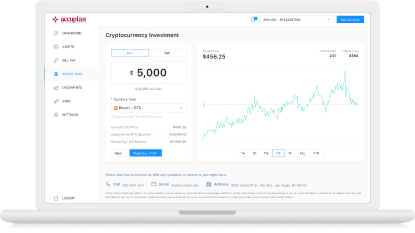
Real Estate
Self-directed Roth IRAs can invest in various real estate assets, such as rental properties, commercial properties and real estate investment trusts.
Tax mechanics
Tax benefits of a Roth IRA.
Roth IRAs are an attractive option for investors who expect to be in a higher tax bracket in the future or who want long-term tax-free growth.
Tax-free qualified withdrawals in retirement
Pay zero federal income tax on qualified distributions in retirement.
Tax-free earnings growth
When IRS withdrawal rules are met, all compounding stays in your account.
No required minimum distributions (RMDs)
Unlike Traditional IRAs, Roth IRAs require no minimum distributions during your lifetime.
How to start
Opening your self-directed Roth IRA.
Opening a self-directed Roth IRA is a relatively simple process. Here is a general guide on how to open a self-directed Roth IRA.
Determine your eligibility
Before opening a Roth IRA, ensure you are eligible to contribute.
Complete the application
Provide your name, address and Social Security number.
Fund the account
Contribute from your bank, transfer from an existing IRA, or roll over a 401(k).
Choose your investments
Direct your IRA into alternatives like real estate, precious metals, private equity and crypto.
The Accuplan difference
Fund your self-directed Roth IRA with Accuplan.
You can do more with a Roth IRA from Accuplan. Invest beyond traditional stocks and bonds in a wide range of alternative assets, such as real estate, private equity and precious metals, which may not be available through traditional IRA custodians. We also provide educational resources and support to help you manage your self-directed IRA. Open a self-directed Roth IRA with us at Accuplan today.
Get Started TodayFrequently asked
Roth IRA questions, answered.
What Are The Roth IRA Contribution Limits for 2026?
For 2026, the IRS has increased the maximum amount you can contribute to a Roth IRA. These limits apply to your combined total contributions across all IRAs, including Roth and Traditional accounts.
- Under age 50: Up to $7,500
- Age 50 and older: Up to $8,600 (includes a $1,100 catch-up contribution)
You must have earned income, and you cannot contribute more than your taxable compensation for the year. Contributions for the 2026 tax year may be made through the federal tax filing deadline (typically April 15, 2027).
Are there Required Minimum Distributions (RMDs) for Roth IRAs?
Unlike Traditional IRAs, Roth IRAs are not subject to Required Minimum Distributions during your lifetime. This allows assets to remain invested longer and continue growing tax-free, making Roth IRAs a valuable tool for long-term planning and legacy strategies.
What Are The Withdrawal Rules for a Roth IRA?
Qualified Distributions
A Roth IRA withdrawal is considered qualified when:
- You are age 59½ or older, and
- Your Roth IRA has been open at least five years
Qualified withdrawals are completely tax-free, including earnings.
Non-Qualified Withdrawals
- Contributions (but not earnings) may be withdrawn at any time without tax or penalty
- Earnings withdrawn before age 59½ may be subject to income tax and a 10% early withdrawal penalty, unless an IRS exception applies
Who is Eligible for a Roth IRA?
Anyone can set up and contribute to a Roth IRA if they meet the following eligibility requirements.
- The account owner has received a taxable salary or wage over the calendar year.
- The MAGI of the account holder does not exceed the IRS-mandated Roth IRA income limits.
Can I Contribute to a 401(k) and a Roth IRA?
Depending on your MAGI, you may not be eligible to contribute to a Roth.
If your MAGI is below the limits decided by the IRS and you have earned income in the contribution year, you may put money into both a 401(k) and Roth IRA. Your MAGI will determine many different benefits you may receive. Still, for retirement accounts, it determines if you are eligible to contribute to a Roth and if you can deduct your traditional IRA contributions.
To calculate your MAGI, you’ll first calculate your adjusted gross income. Then, you’ll add any deductions specified by the IRS. MAGI is always the same or greater than your AGI.
How Do Roth IRAs Differ From Traditional IRAs?
The primary difference between these two account types is when taxes are due. Roth IRA contributions and investments are immediately taxable, while traditional IRAs delay taxes until taking distributions.
Roth IRA owners pay taxes upon contributing to the IRA but receive no tax break benefits. However, they benefit from paying zero taxes on their IRA funds when they retire.
Traditional IRAs are almost exactly the inverse. You’ll pay no taxes while contributing to the IRA, and contributions can be fully or partially tax-deductible. Taxes for traditional IRAs are then due upon retirement when you withdraw distributions.
What Are The Income Limits (MAGI) for Roth IRA Eligibility?
Your ability to contribute directly to a Roth IRA depends on your Modified Adjusted Gross Income (MAGI) and tax filing status.
| Filing Status | Modified AGI | You Can Contribute |
|---|---|---|
| Married filing jointly or qualifying widow(er) | Less than $242,000 | Up to the limit |
| $242,000 – $252,000 | A reduced amount | |
| $252,000 or more | Zero | |
| Single, head of household, or married filing separately (didn’t live with spouse) | Less than $153,000 | Up to the limit |
| $153,000 – $168,000 | A reduced amount | |
| $168,000 or more | Zero | |
| Married filing separately (lived with spouse) | Less than $10,000 | A reduced amount |
| $10,000 or more | Zero |
If your income falls within the phase-out range, you may still be eligible for a reduced contribution.
Keep reading
More on Roth IRAs and tax-free growth.
How to Rollover Your IRA to a Self-Directed IRA
Read article→
4 Compelling Reasons to Contribute to a Roth IRA
Read article→
Borrowing and Lending from a Self-Directed IRA
Read article→
How and When a Hardship Withdrawal Is Allowed in an IRA or 401(k)
Read article→
Can I Use My IRA to Start a Business?
Read article→