
A Guide to SDIRAs for Beginner Investors

Have you ever felt that you’re not in total control of your future wealth? As investors plan and strategize for their retirement, it’s perfectly normal to consider options beyond the typical areas. Funds locked away in stocks, bonds or mutual funds can feel intangible and disconnected from your future financial stability.
You’re not alone in this frustration. Many investors are seeing the benefits of taking control of their retirement through self-directed individual retirement accounts (SDIRAs). At first, the concept of an SDIRA may seem complicated and confusing. How can you sift through the noise and move away from conventional IRAs to embrace new, greener retirement pastures?
Taking control of your own future doesn’t have to be difficult. It just needs a little information and the right provider for your needs. In this beginner’s guide to SDIRAs, we explain how self-directed IRAs offer you the freedom to invest in what you know and trust. We also discuss the investment possibilities of assets like gold, real estate and cryptocurrency while working with a trusted expert to support you.
What Is a Self-Directed IRA?
A self-directed IRA is a retirement account that offers greater control over your investment choices. It provides more freedom than a traditional IRA, which offers limited stocks, bonds and mutual funds chosen by the firm. With an SDIRA, your investment options are only limited by what the IRS allows.
The IRS specifies several IRA types that any self-directed investor can use if eligible:
- Traditional IRA: This account is a typical tax-advantaged personal savings plan funded with pretax dollars.
- Roth IRA: This account is similar to a traditional IRA, but you pay taxes on money going in and can withdraw tax-free in retirement.
- SEP IRA: A Simplified Employee Pension is set up by an employer, who makes direct contributions. Employees cannot contribute to an SEP plan.
- SIMPLE IRA: A Savings Incentive Match Plan for Employees is also employer-sponsored but is funded with pretax salary deferral contributions from employees and employer contributions.
Most standard banks won’t deal with alternative investments beyond the assets they offer. For this reason, a self-directed game plan needs a specialized administrator who can navigate your SDIRA effectively.
Why Choose a Self-Directed IRA?
Planning for financial stability can lead you to many types of retirement plans, benefits and other savings options. A self-directed IRA allws you to invest in a wider variety of investments. The concept of SDIRA for beginners isn’t just about freedom. It’s about embracing a new framework where you can prepare for retirement your way, with benefits that include:
- More flexibility and control: A SDIRA account gives you more freedom and control. Novice investors can benefit from the support of skilled experts when considering where to invest.
- Diversification: Retirement investments placed only in the stock market are exposed to market volatility and unexpected economic shifts. An SDIRA can be used to develop stable passive income by investing in alternative markets, hedging against inflation in the stock market.
- Tax advantages: SDIRAs offer the same tax-free or tax-deferred benefits as a standard or Roth IRA. This means keeping all of those tax-efficient practices without the limited asset choices of conventional retirement investment options. Get the same benefits, but with more control for you.
- Potential for increased returns: Having more control over your investments means investing in areas you feel confident and comfortable in. You can curate a unique portfolio of investments beyond a conventional stock portfolio, which may have the potential to create higher returns.
Choosing an individual retirement account has become increasingly popular over the years — a total of 57.9 million households had an IRA in mid-2024.
What Can You Invest In?

It’s far easier to list the assets that aren’t permitted in a self-directed IRA than those that are. The list of permitted assets is expansive, but each SDIRA provider has its own policies on which investments it supports. Some of the common popular types of investments that someone with an SDIRA might consider include:
- Pre-IPO companies: Receive shares in private companies before they’re listed publicly, offering early access to companies in high-growth.
- Heavy equipment: This category includes engine-powered agricultural and construction machinery, such as bulldozers, excavators and dump trucks.
- Cryptocurrencies: This is a high-growth alternative investment asset, estimated to reach $97.7 billion worldwide in 2026.
- Real estate: Rental properties, commercial buildings and land are popular areas of real estate investment.
- Private loans: Non-bank related, privately negotiated loans are usually secured against business-related assets.
- Oil and gas rights: Invest in mineral rights or resource ownership underneath parts of land.
- Intellectual property: This category includes trademarks, patents and designs.
- Precious metals: Invest in metals such as gold, silver, platinum and palladium
The list certainly doesn’t end there — you can invest in several more areas with an SDIRA. Many of these investments, such as cryptocurrency, are in innovative, growing industries with significant long-term potential for investors.
Rules Every SDIRA Investor Must Know
There are some manageable but extremely important rules and regulations that you’ll need to follow with an SDIRA. Violating these rules will lead to fines, fees and penalties that could wipe out the entire capital in your retirement account. However, this is easily preventable with guidance from a professional experienced in self-directed investments.
While this list is not exclusive, the most important rules that every SDIRA investor needs to know at the beginning of their journey are listed below.
Don’t Use SDIRA Capital to Buy Prohibited Assets
When Congress created IRAs in 1974, there were just two types of investments specifically prohibited by that legislation — life insurance and collectibles. If you can be certain that you’re not investing in either of these, you’re probably in the clear.
However, the definition of collectibles has expanded and evolved over the years. Fortunately, the IRS provides examples of collectibles in IRC Section 408(m)(2). That list currently includes:
- Any work of art
- Any rug or antique
- Any metal or gem, with limited exceptions
- Any stamp or coin, with limited exceptions
- Any alcoholic beverage
Many beginners considering an SDIRA will be curious about the permissions for gold and other precious metals. The IRS permits certain exceptions for you to hold gold, silver, platinum, palladium and certain types of coins in your account. However, there are still some rules on how assets like this are governed and who has possession of them.
Don’t Use Your SDIRA to Benefit a Disqualified Person
Put simply, a disqualified person is any individual whose benefit might represent some sort of personal benefit to you. Why doesn’t the IRS want these individuals to benefit? The tax advantages of an individual retirement account are intended to incentivize you to save for the future. Generating income in the present isn’t something to focus on.
People who meet the disqualified person criteria include:
- You, as the owner of the IRA
- Most of your family, including your spouse, ancestors, children, your children’s children and their spouses
- Businesses and organizations in which you or a family member has ownership or influence
- IRA account professionals who offer services connected to the IRA
If you use your self-directed IRA to benefit a disqualified person, the IRS will deem it a prohibited transaction. The IRS defines a disqualified person at length in the tax code. These definitions are periodically updated and refined. It’s important to work with a qualified professional to help you identify whether a party might be a disqualified person before you work with them.
It’s not enough to avoid committing prohibited transactions with disqualified parties. Doing deals with anyone who may have influence over you or your business, including any third-party fiduciary, can put your SDIRA at risk.
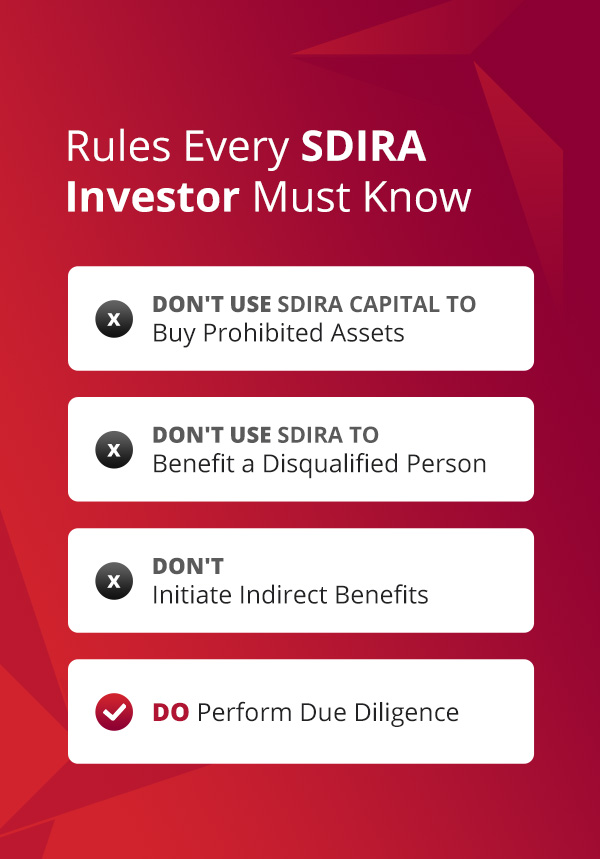
Don’t Initiate Indirect Benefits
Similar to transactions made for your own benefit, self-directed IRA guidelines prohibit account holders from initiating transactions for indirect benefit. This includes certain actions or transactions that benefit the account owner before retirement. Many factors might be classified as indirect benefits.
Here are three of the most common examples for beginners to avoid:
- Paying out of pocket for IRA costs: Personally paying for any expenses that your IRA should cover is an indirect benefit and may disqualify your account. For example, if your IRA owns real estate, you should not pay for repairs personally.
- Living in an IRA-owned property: Inhabiting an IRA-owned property disqualifies your SDIRA plan and should be avoided at all costs.
- Loaning IRA funds: Loaning your IRA funds to an unrelated party and having them repay you is also strictly prohibited.
A good beginner’s guide to SDIRAs can help you get the information you need before making your final decision. Without the right support and guidance, even experienced investors can unknowingly violate these rules.
Performing Due Diligence
It’s best to conduct your own due diligence before investing in an alternative investment. This means taking the time to investigate all aspects of the business. It also includes conducting an independent evaluation of whether the statements in the offering documents are complete and accurate. Why does this matter to investors looking to take ownership of their retirement? For a start, the Securities Act of 1933 has provisions against fraud that require the issuer and its representatives to provide all facts with complete accuracy and in full.
If issuers don’t seem willing to discuss their business in greater detail than is provided in the offering documents, even under a Non-Disclosure Agreement (NDA), alarm bells should ring. The information collected should be readily available to potential Investors. This information is typically provided to prospective investors via a web-based portal and should be easily accessible. Having access to this information is an important part of making the best decision for your specific investment goals.
The Role of IRA Administrators and IRA Custodians
What options are available for investors who want a provider to help ensure adherence to these rules? Making a distinction between an IRA administrator and an IRA custodian is a vital part of the SDIRA for beginners puzzle. An administrator is your partner, handling any necessary paperwork, customer service needs or transactional processing. A custodian is the actual regulated entity that legally holds the assets.
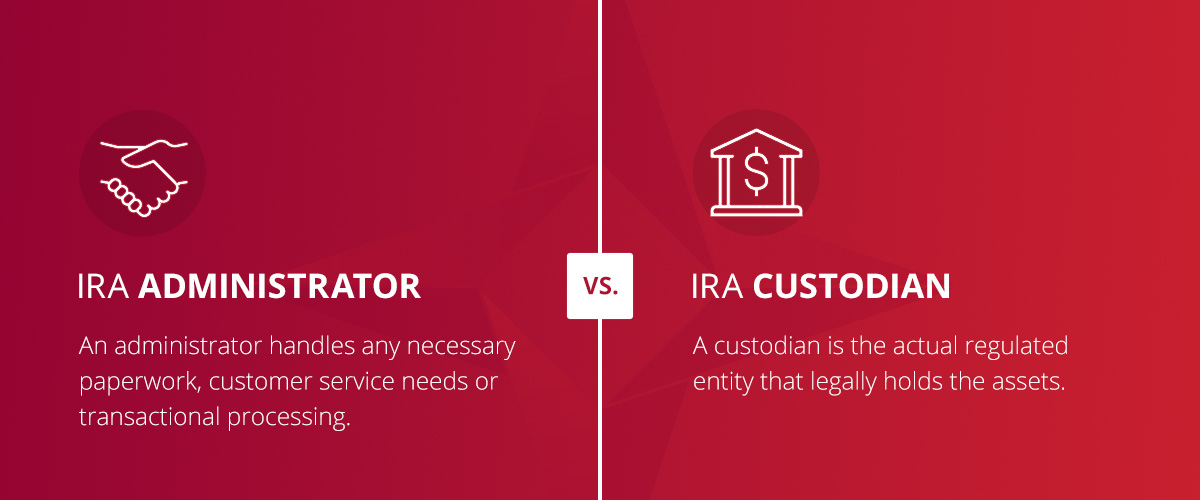
Essentially, administrators will be your daily guide and support for any needs or questions. Custodians are regulated by state and federal authorities and deal directly with the IRS to ensure regulatory compliance. Deciding on a provider for your SDIRA journey plays an integral part in how comfortable and confident you’ll feel.
Choosing the Right Self-Directed IRA Administration Provider
Violating any IRA rules or prohibited transactions will result in your SDIRA being disqualified. Whether intentional or not, SDIRA beginners face the same penalties as experienced individuals. This penalty could be up to 15% of the prohibited transactional amount. This penalty is due within a set time period, and failure to pay on time can result in an additional tax equal to 100% of the transactional amount.
Choosing the right provider is one of the most important parts of opening an SDIRA. By taking the time to seek out an experienced, reputable provider that can handle all asset types, you’ll be on the right path to investing in your retirement, your way.
Why So Many SDIRA Beginners Trust Accuplan
Taking control of your retirement shouldn’t come with stress and uncertainty. It should be an exciting time in life, where you leverage the insights of a trusted provider to gain clear, actionable answers without unnecessary jargon. With Accuplan, beginners are getting a team of experienced industry veterans. Our dedicated team members can answer any questions or concerns and provide general guidance regarding investments or IRS rules .
When you open your account with Accuplan, you get access to an intuitive investment dashboard that uses complex technology to make your investing simple. We provide a customizable self-directed plan, allowing you to reshape your retirement portfolio. Our services include everything needed to successfully save for retirement, including HSAs, 401(k)s, business accounts and Employee Wellness Programs.
We’ve been passionately supporting our clients since 2007, managing over $1.5 billion in assets across over 10 thousand active accounts. Are you looking to open your own self-directed IRA account? Learn more about investing in alternative assets like real estate, precious metals, cryptocurrencies and private equity by contacting our experts today. Our team is committed to providing clear guidance at every stage, so you can confidently navigate the complexities of self-directed investing.
*Our information shouldn ’t be relied upon for investment advice but simply for information and educational purposes only. It is not intended to provide, nor should it be relied upon for accounting, legal, tax or investment advice.